Screenshots
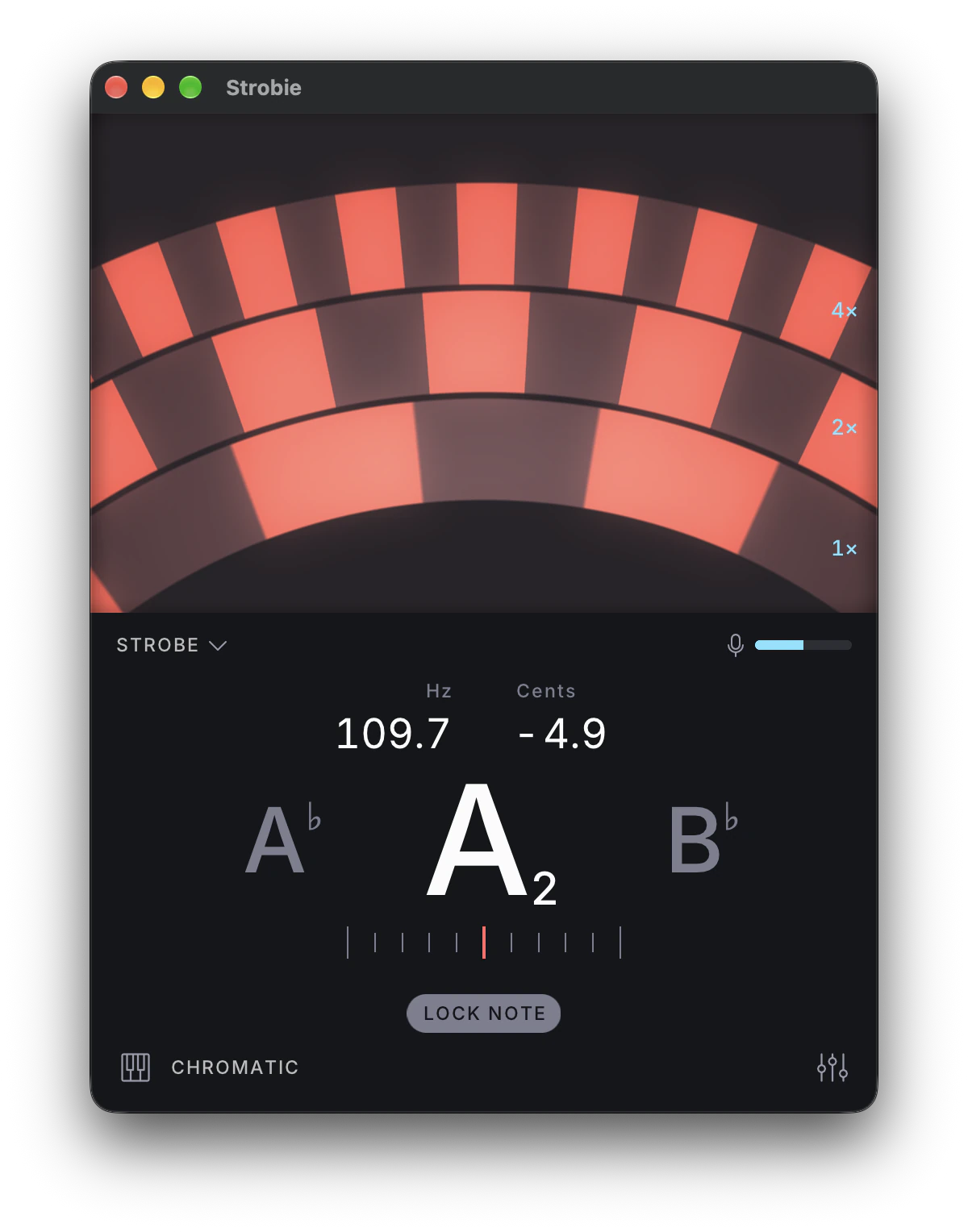
StrobeCurved tracks, the 1×, 2× and 4× partials of an A2. 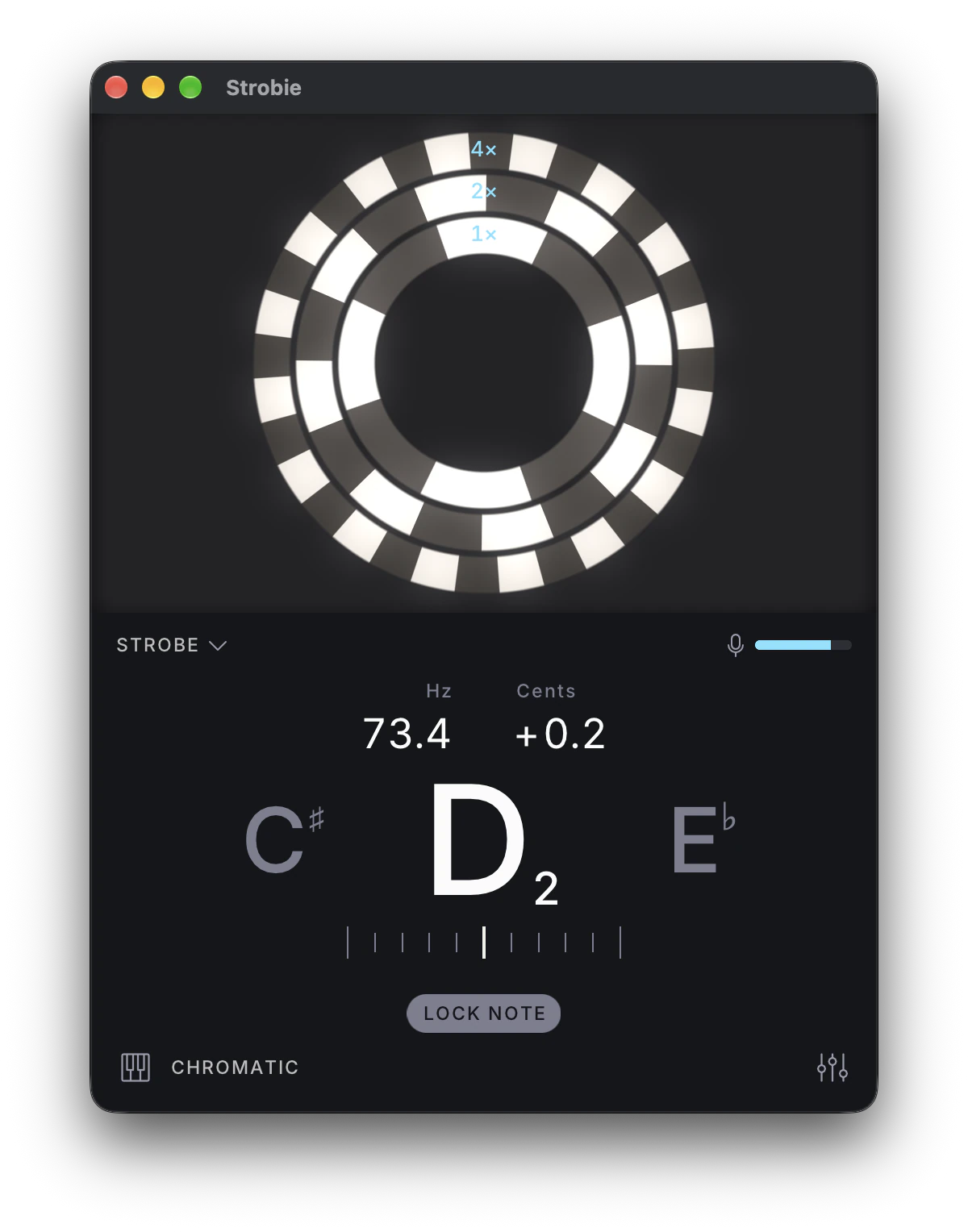
WheelA ring for each partial, in the Mono colors. 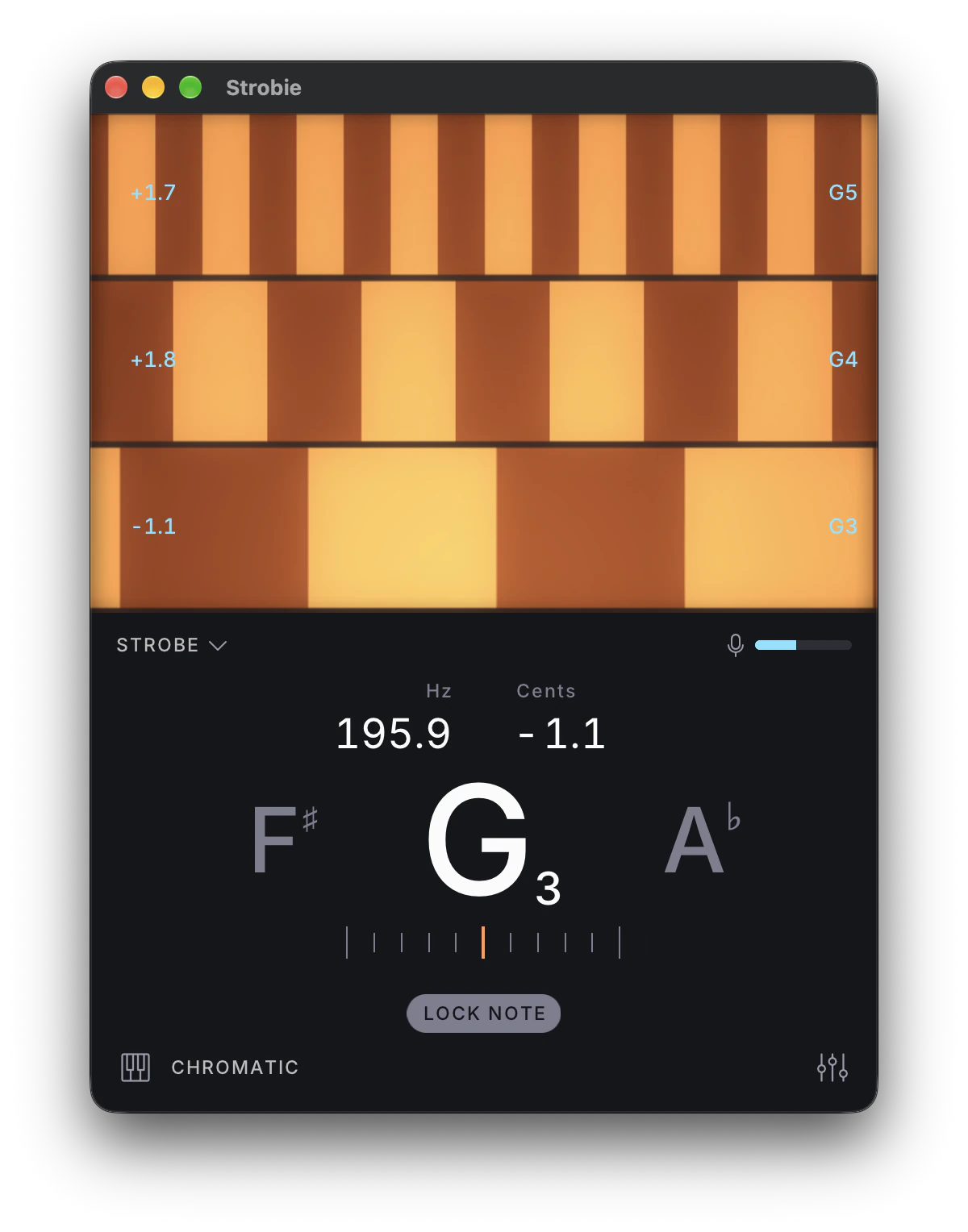
Track labelsEach partial's note and cents on its track. 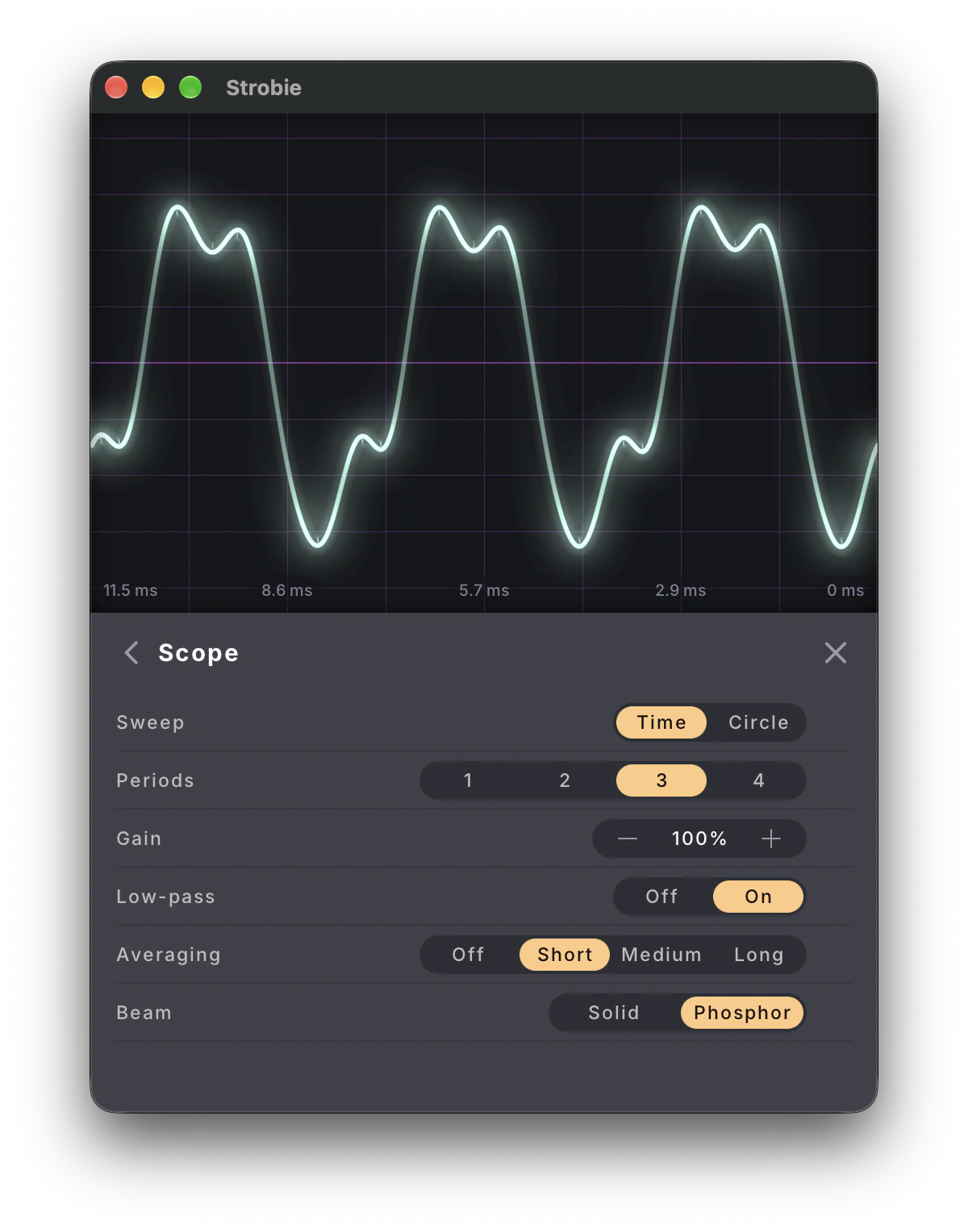
ScopeThe waveform on a sweep that follows the note. In tune, the wave stands still. 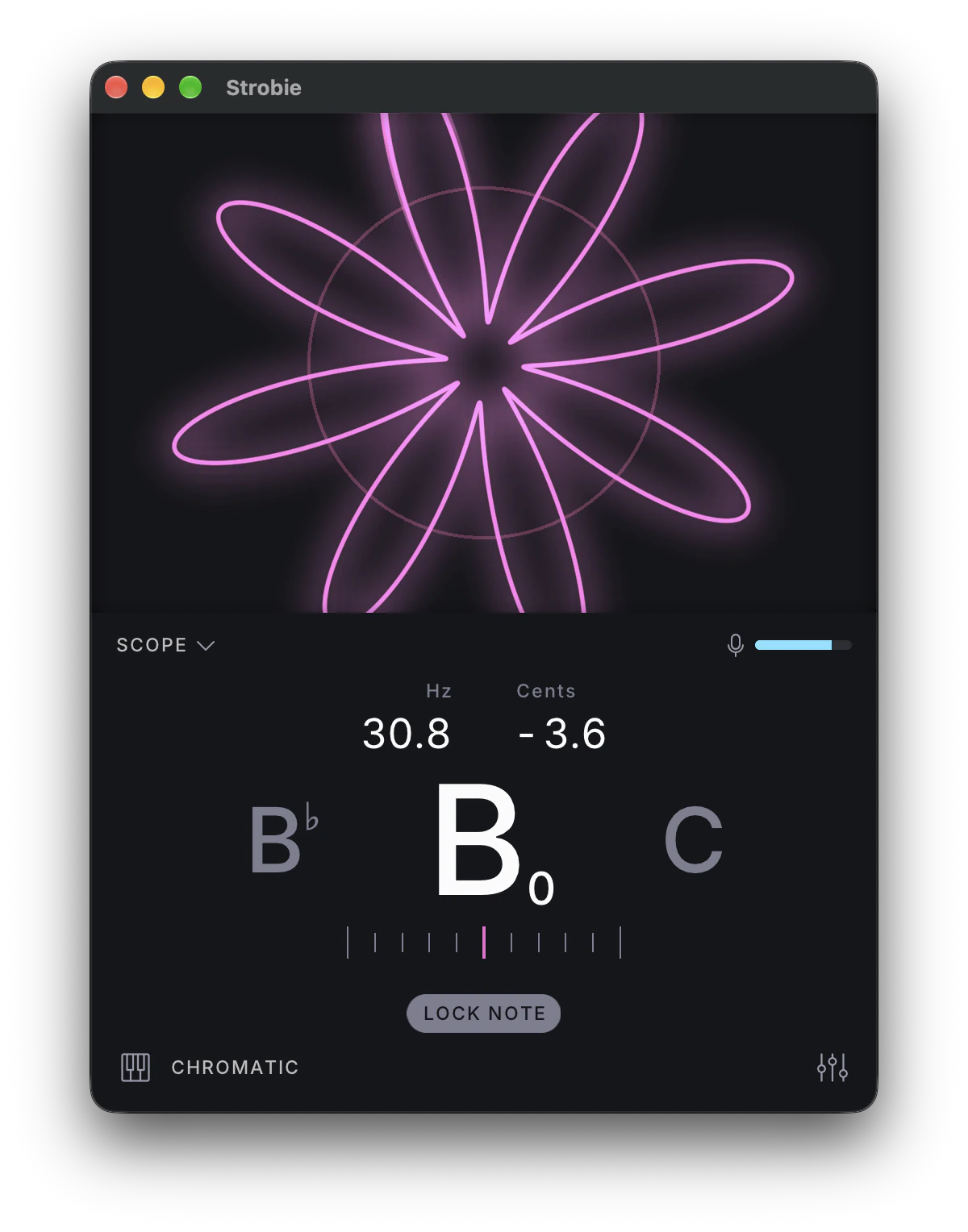
CircleThe wave wrapped round a ring, here a 5-string bass's low B. 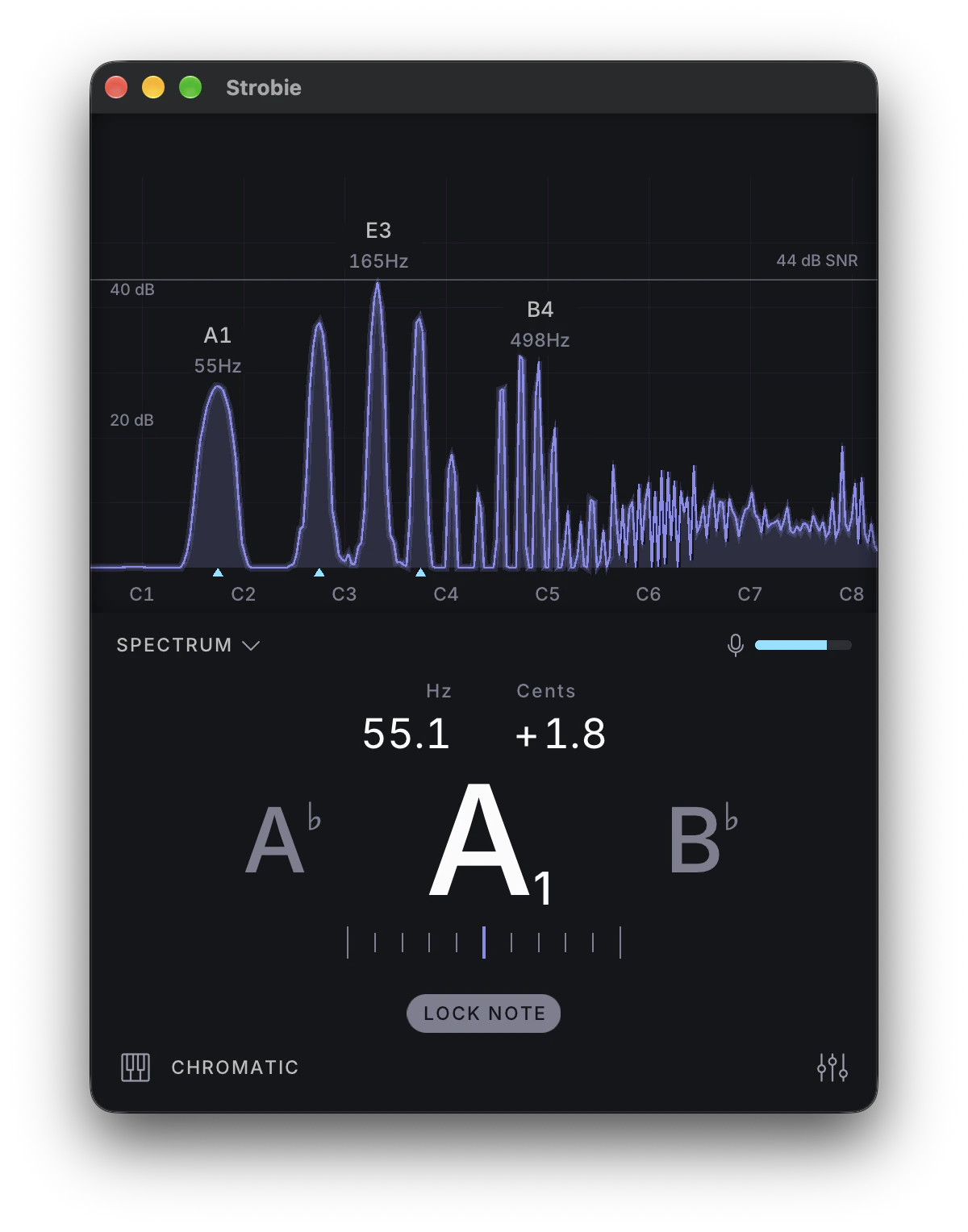
SpectrumWhat the pitch detection hears, the loudest peaks named by note. 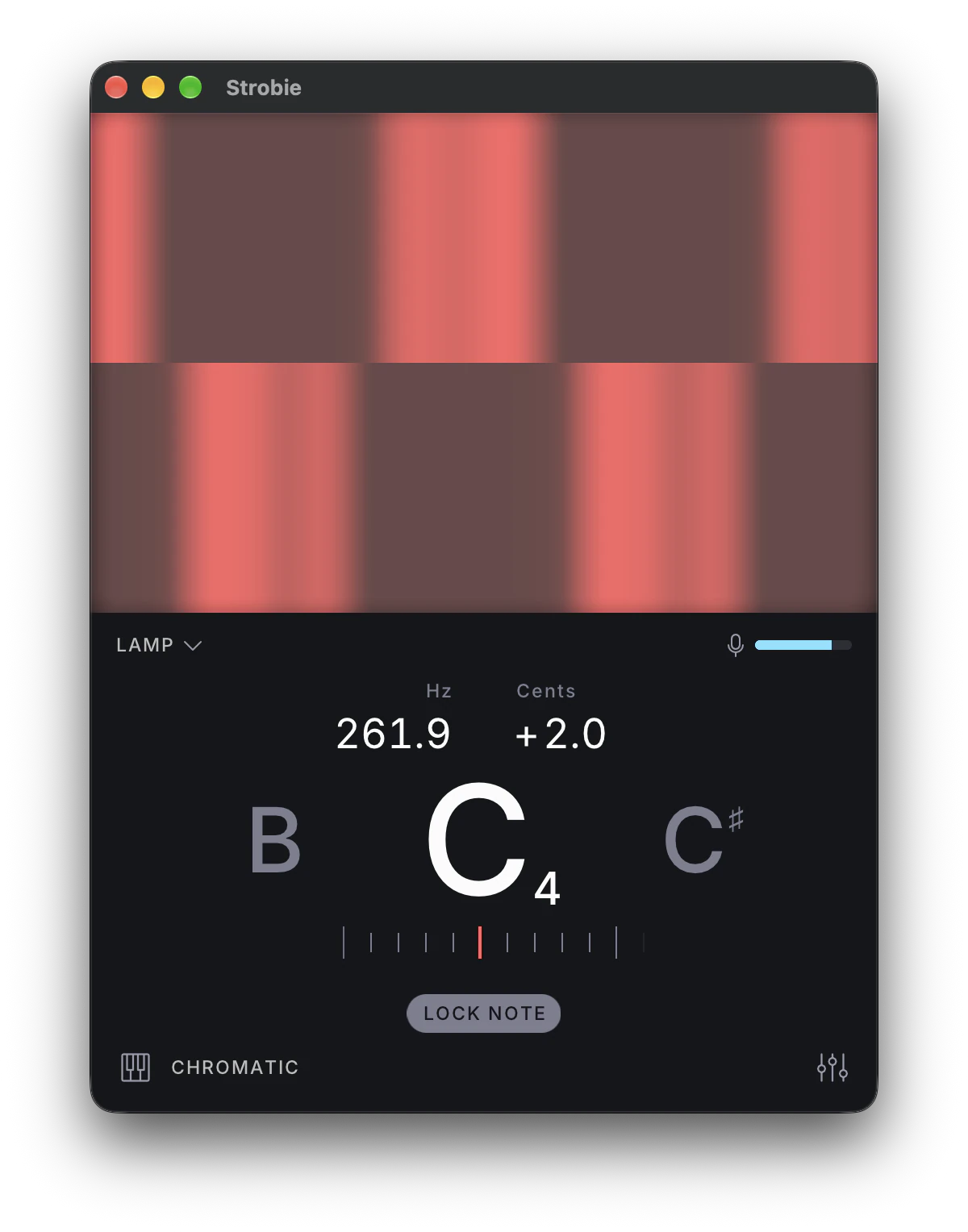
LampThe whole sound unfiltered, like the spinning disc of a vintage strobe tuner. 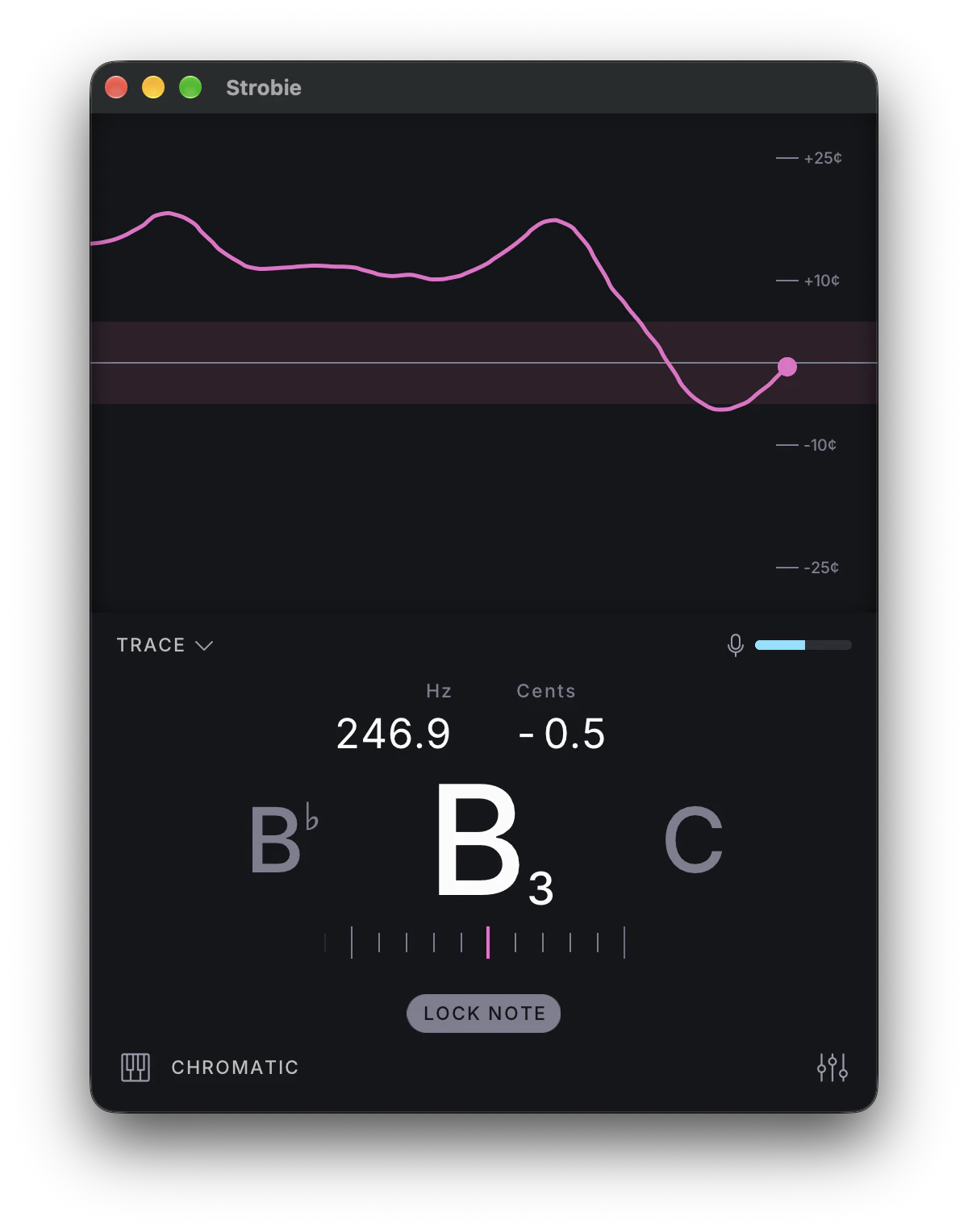
TraceThe cents over the last few seconds, for a vibrato or a slow drift. 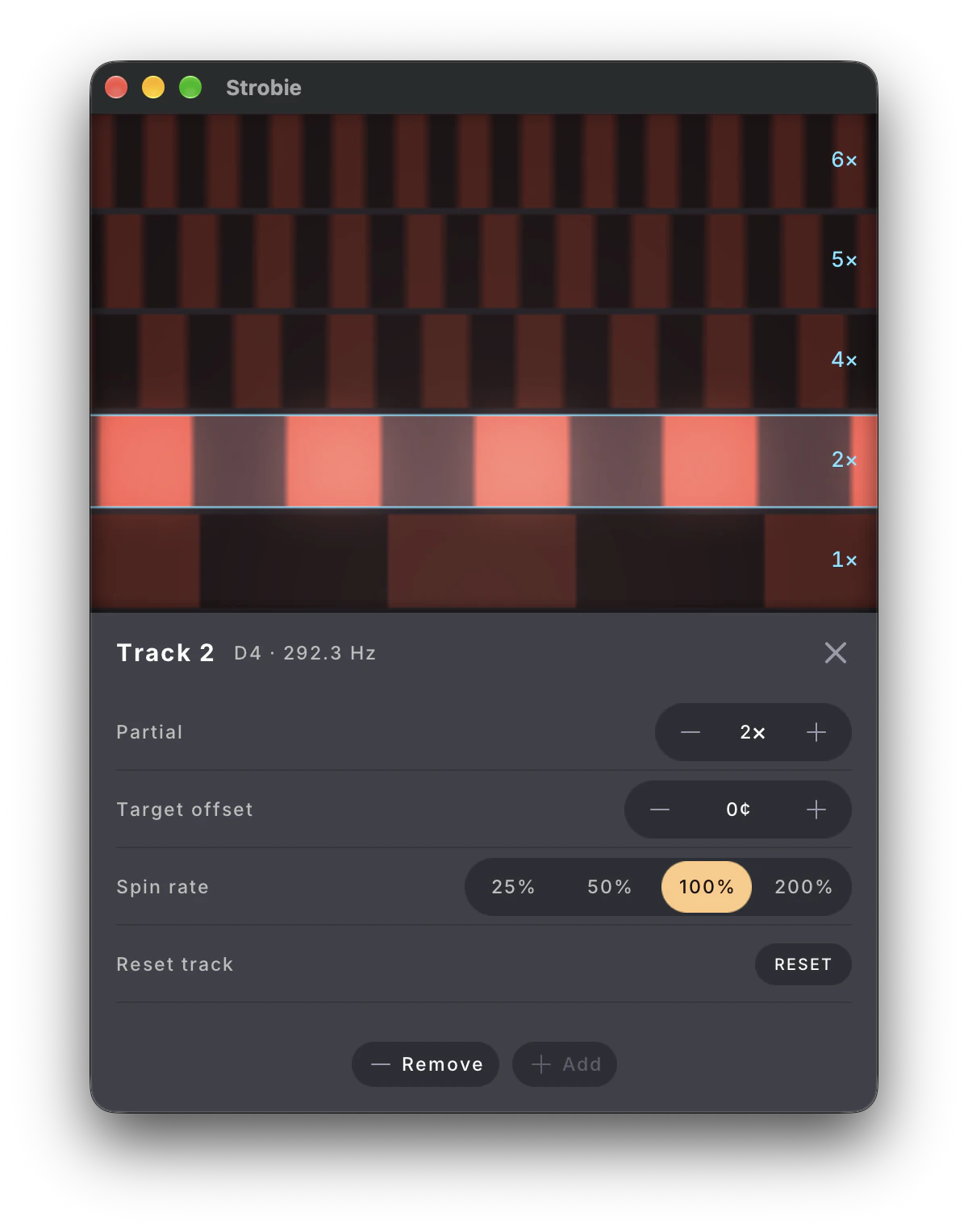
Five tracksUp to five, each on a partial from 1× to 8×. 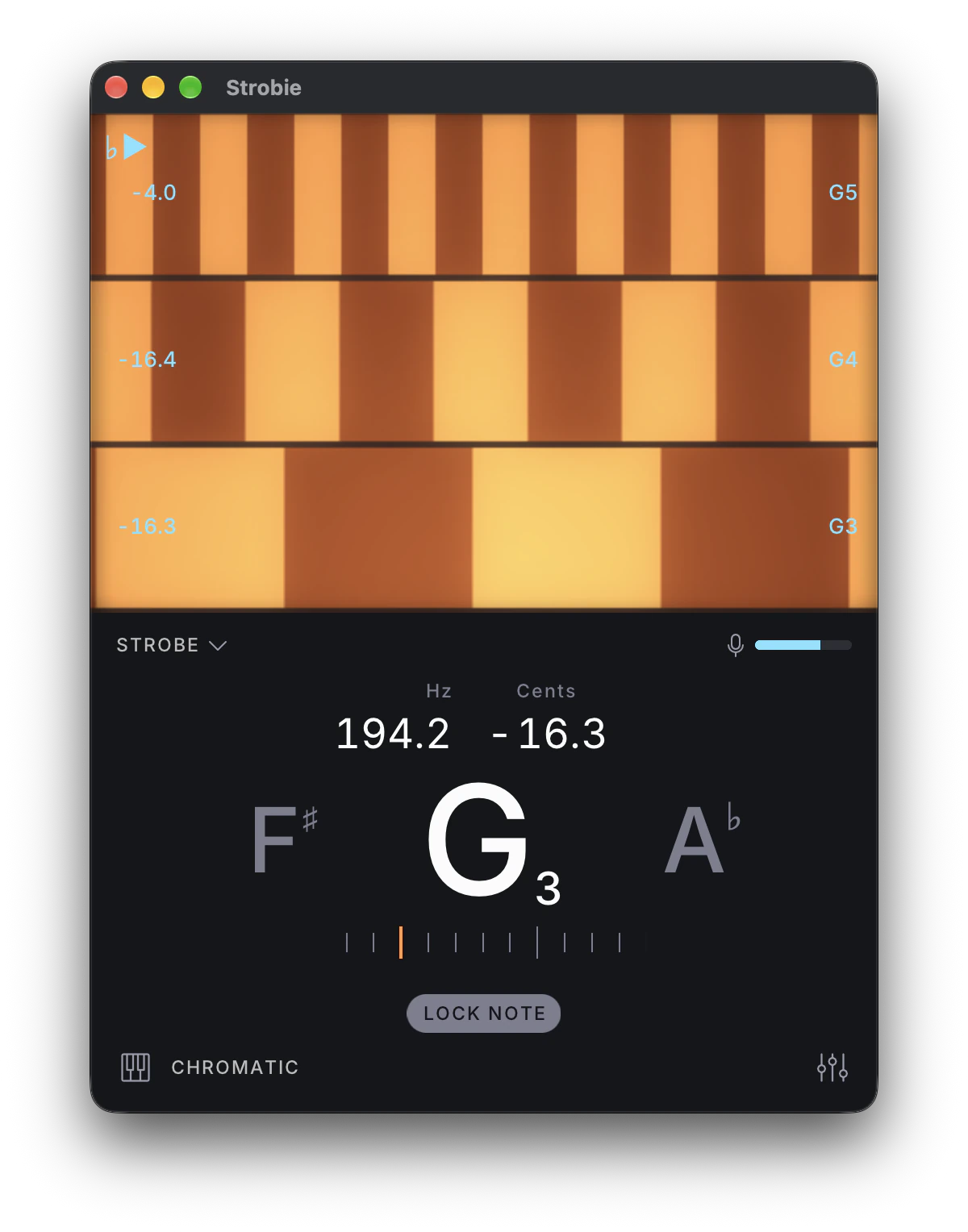
ArrowsMore than about 10 cents off, an arrow on the strobe points the way to tune. 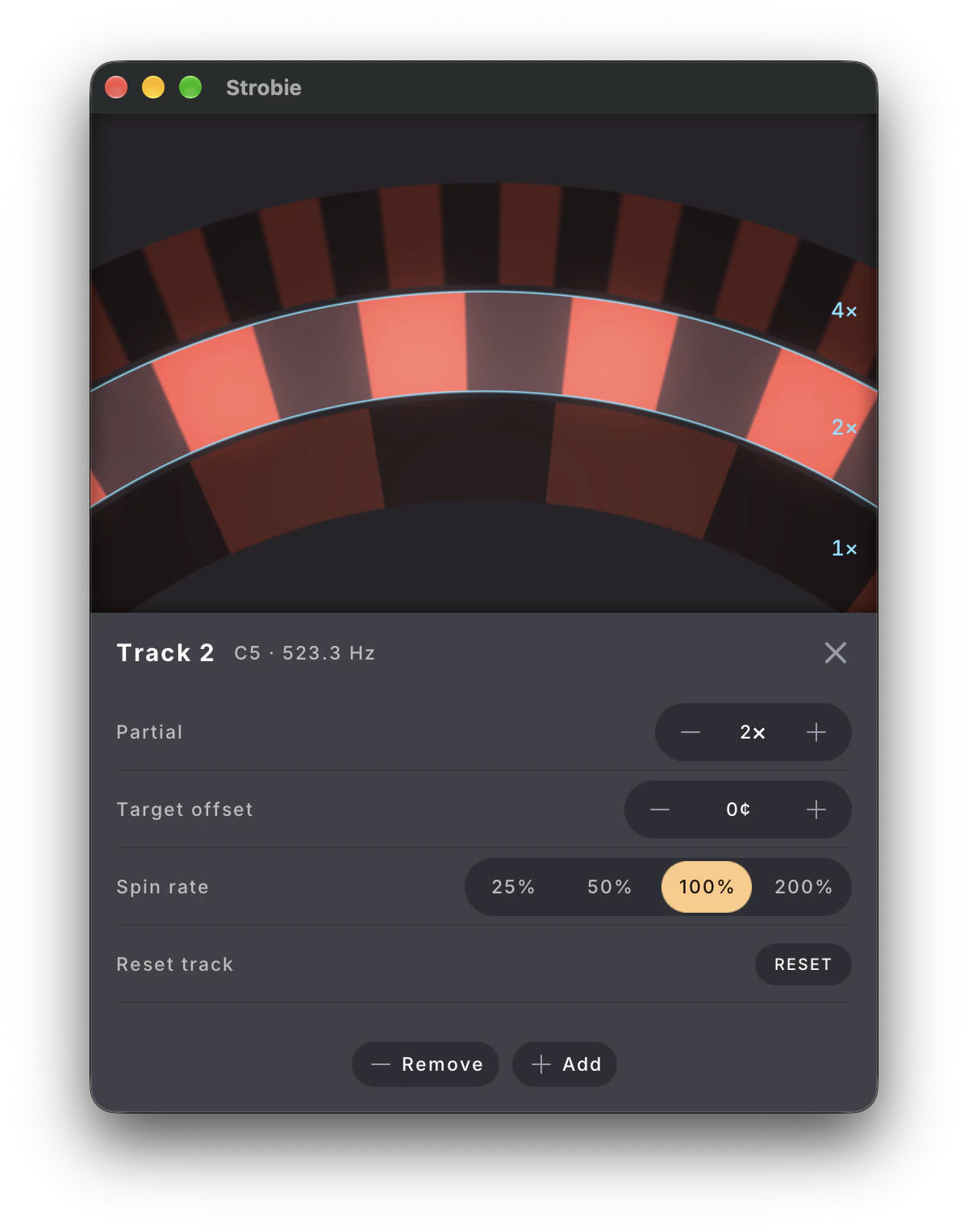
Track settingsTap a track for its partial, target offset and spin rate. 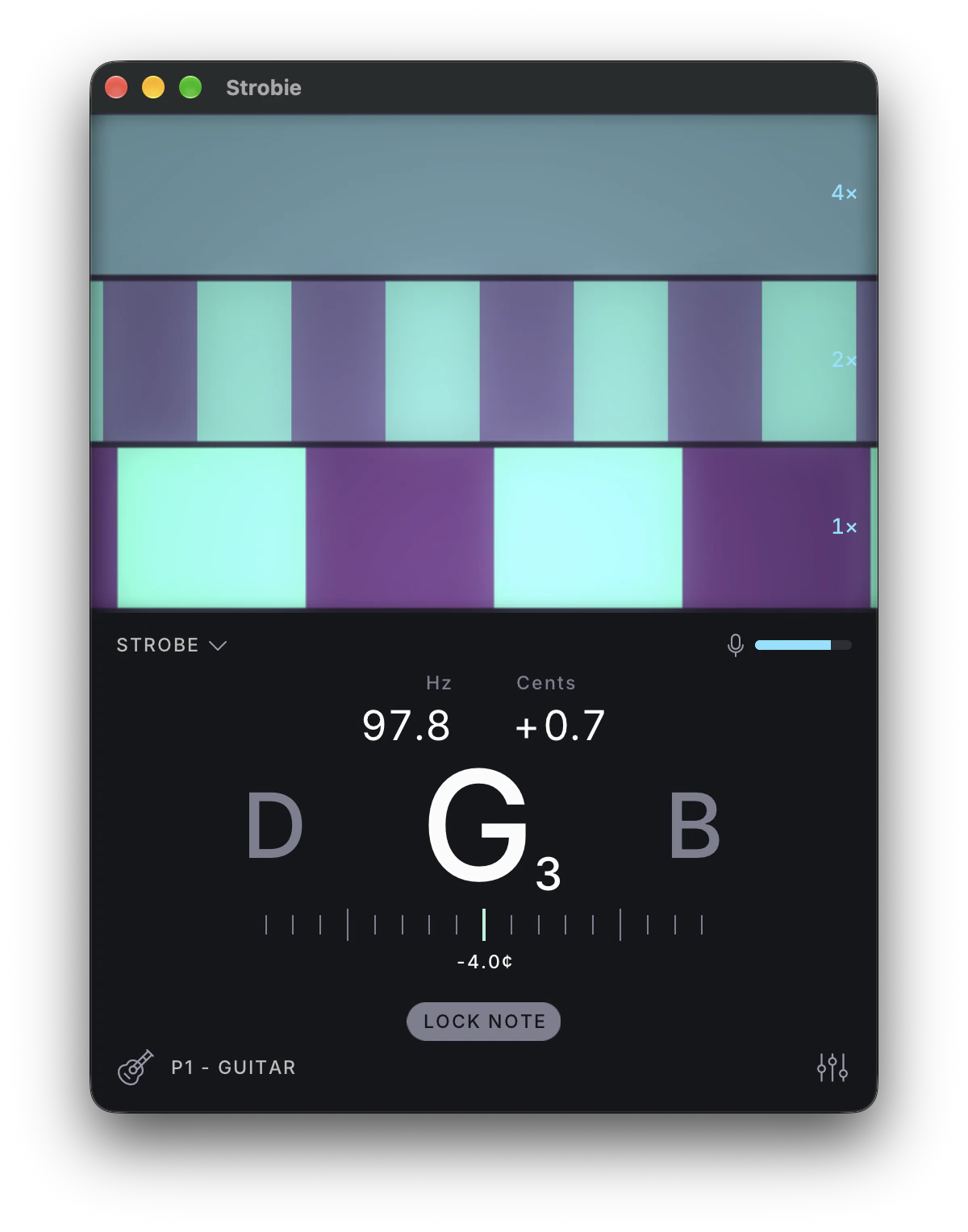
Guitar presetThe ruler holds the guitar's strings, with the G string's offset under the gauge. 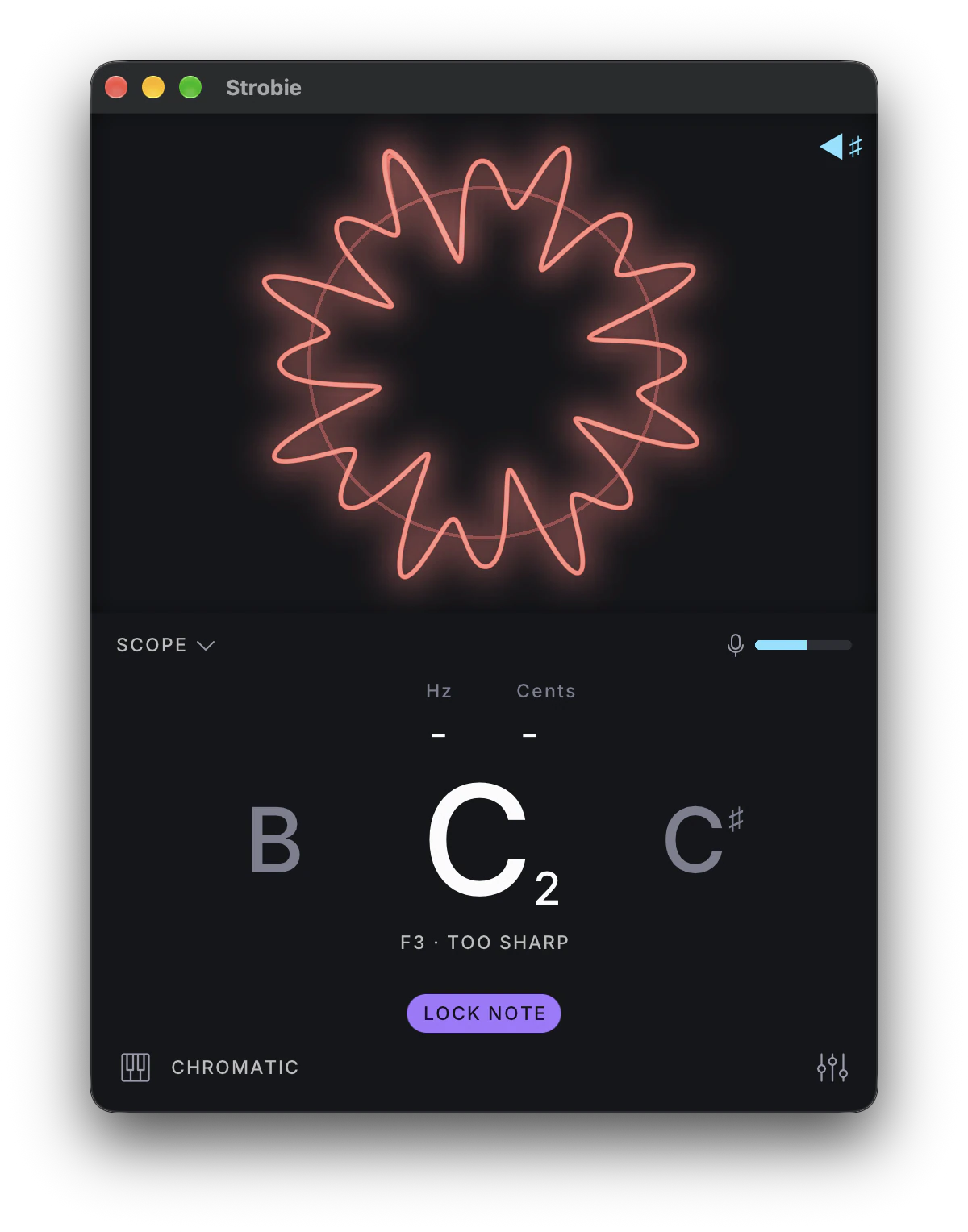
Note lockThe note held on C2. An F3 played instead reads too sharp. 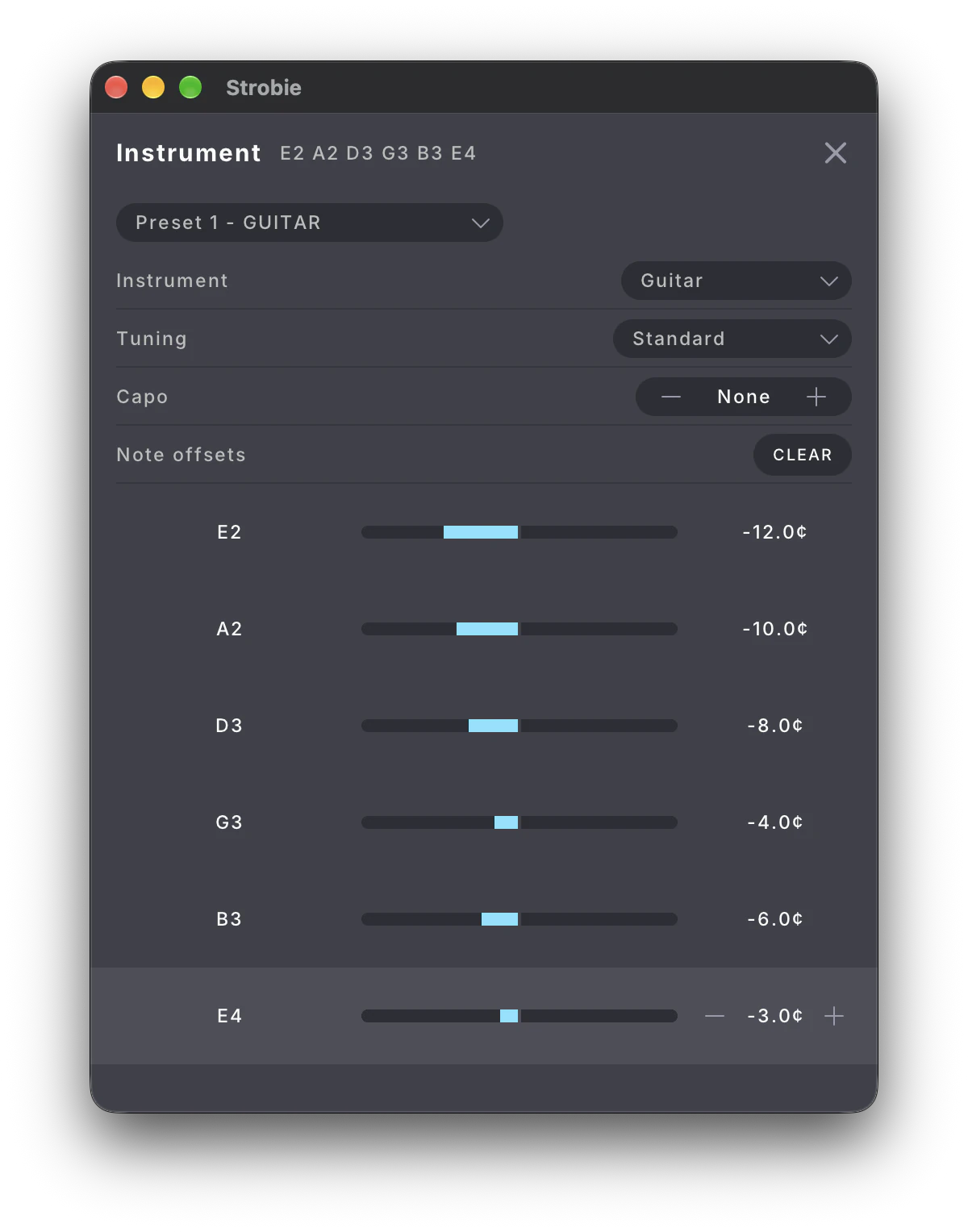
InstrumentA preset's instrument, tuning, capo and an offset for each string. 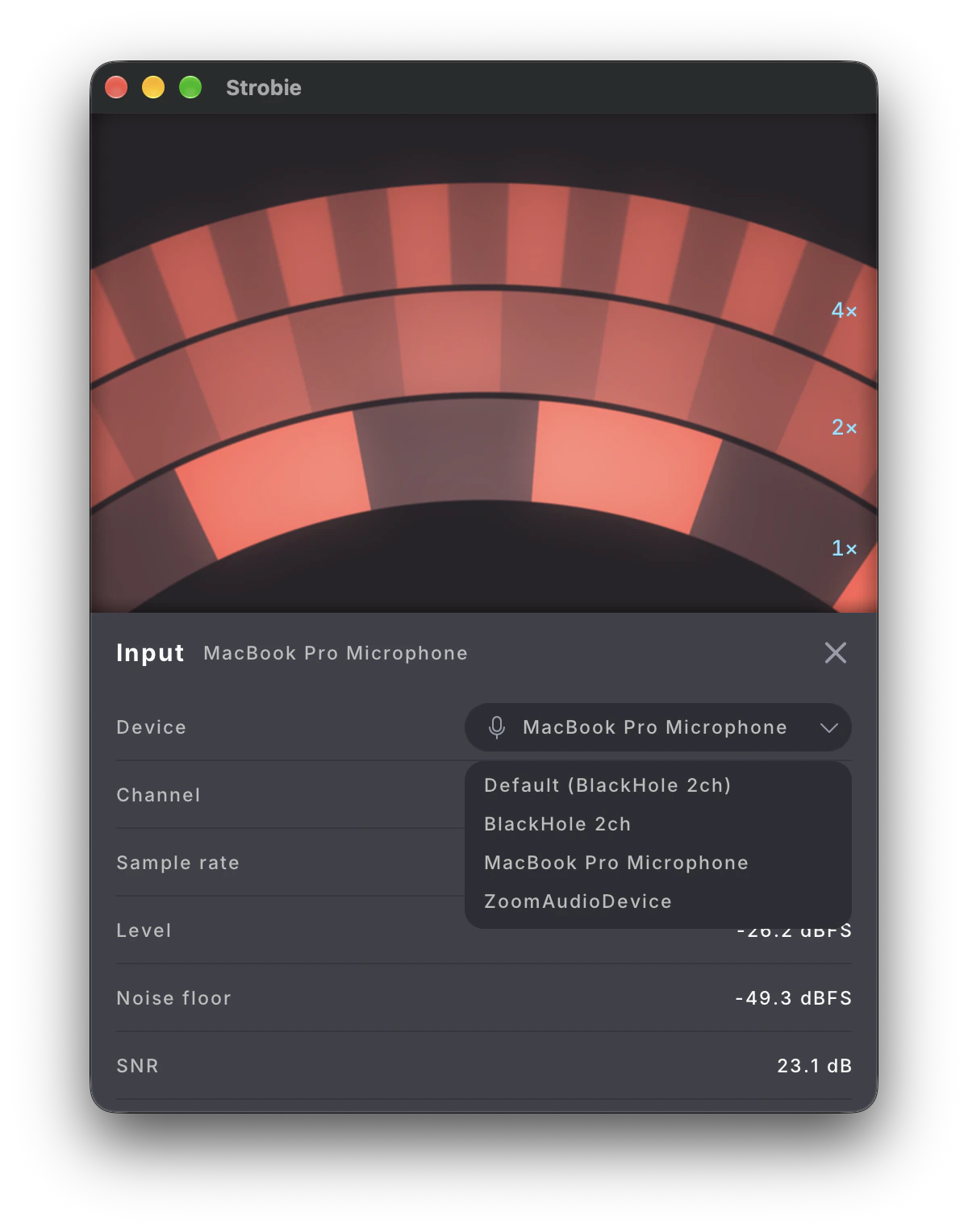
InputThe device, its channel and sample rate, with the level, noise floor and signal-to-noise ratio.
Features
Harmonic mode
The overtones next to the fundamental, up to five tracks, each on its own partial of the note: 1× to 8×, or the fifth at 1½×. Each track turns by the measured phase of its partial, and stands still when that partial is in tune. Tap a track for its settings: the partial, a target offset for a stretched octave, and how fast it spins.
Stretch a guitar's octaves the way a piano is tuned, the low E's 4× standing still on the high E.
Note lock and ruler
Hold one note while a string comes up from far off. Swipe the ruler to pick another. The strobe shows a picked note even when it rings short and quiet, like a piano's top keys up to C8.
Displays
Strobe, Scope, Trace, Lamp and Spectrum, switched with a tap on the display's name. Each has its own options in the settings, and a tap on the display itself flips the one you'd reach for most.
Instruments and presets
Guitar, 7-string, bass, ukulele and baritone ukulele, in standard and alternate tunings (Drop D, DADGAD, open G…) with a capo. Four presets keep your own instruments, each with its note offsets.
Note offsets
An offset per string in a preset, up to ±25 cents in half-cent steps. The strobe stands still at the offset pitch, so a string meant to sit a few cents flat reads as in tune.
Automatic note recognition
Locks on to the note in about a tenth of a second* as you play. It finds the fundamental even when the overtones are louder, or missing altogether.
* From silence, on generated tones. The lowest bass notes take up to a fifth of a second. The microphone and the screen add their own delay.
Readout
Studio-grade accuracy, within 0.1¢ on generated tones. Hertz and cents to a tenth, of the fundamental, the octave, or a blend of the whole sound like most tuners. A guitar or piano string's overtones run a little sharp, so the three read a few cents apart. Averaged over 0.4 s to even out a vibrato, or 0.15 s to follow the string as you tune it.
Tuned and tested
Lab-tested on over 60,000 generated tones, every note from B0 to C8 at three concert pitches, clean and in noise. Then on 139 recorded notes of an acoustic and an electric guitar, a bass and a ukulele, each played again a known number of cents off: in all 1,946 runs the readout moves by that much to within a cent.
Transposition and concert A
Read notes as a B♭, E♭ or F instrument plays them, with concert A anywhere from 390 to 480 Hz, from baroque pitch to a 442 orchestra.
Any input
The built-in mic or an audio interface, at its own sample rate. From 88.2 kHz up it's halved, down to 44.1 or 48 kHz. Tap the level meter for the device, its level, noise floor and signal-to-noise ratio.
Privacy
No account, ads, analytics or network access. The audio is analysed in memory and never leaves your device.
GPU acceleration
Hardware accelerated, with custom Metal shaders, at up to 120 fps on ProMotion displays.
Open source
Read the code and build it yourself from GitHub.
Specifications
| Mac | Apple silicon, macOS 26 or later |
|---|---|
| iPhone and iPad | iOS 26 or later |
| Note range | Strobie recognises the note from a 5-string bass's low B to the top of a guitar's neck. With the note locked, any key from A0 to C8, 27.5 to 4186 Hz. |
| Concert A | 390 to 480 Hz |
| Note recognition | Our multi-harmonic pitch engine finds the note fast. It hears every harmonic (the way your ear does) and allows for the stretched partials of real strings. |
| Strobe | A true strobe: each track measures the phase of its partial in the signal itself, it isn't animated from a pitch reading. The stripes turn the right way at any speed, on high notes too. |
| Response | The stripes follow a string being tuned within about 0.1 s on a guitar's low E, sooner on higher strings. |
| Tracks | Up to 5, each on a partial from 1× to 8× or the fifth, its target movable ±50¢ for stretched octaves. |
| Readout | 0.1¢ and 0.1 Hz, from the fundamental's track, the octave's, or a blend of the partials from the note recognition, the way most tuners read. Averaged over 0.15 s to follow a string being tuned, or 0.4 s to even out a vibrato. |
| Accuracy | ±0.1¢ on generated tones within 20¢ of the note. Within 1¢ on 139 recorded notes of real instruments. |
| Noise | Works in a noisy room, tested with noise 20 dB under the note. Adapts to the room and the instrument, no sensitivity to set. The stripes fade in as the note rises above the noise. |
| Sample rate | 44.1, 48, 96, 192, or any other up to 384 kHz |
| Display | Up to 120 fps on ProMotion displays |